

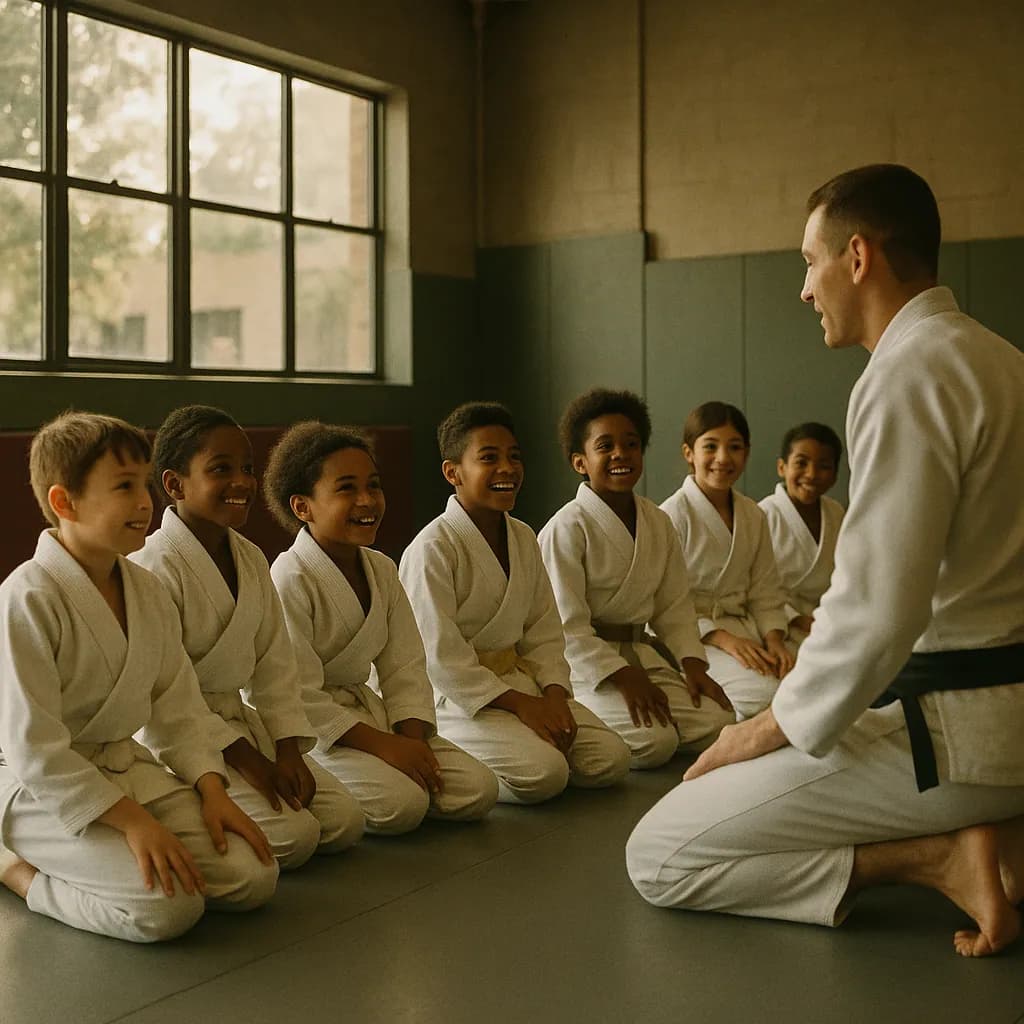
Our youth program is where students start learning the deeper layers of Brazilian Jiu-Jitsu (positions, escapes, control, and problem-solving) in a class built for kids, not mini-adults.
Classes are more structured and technical than Tots, and they follow many of the same ideas we teach in our adult program. The difference is pace, pressure, and curriculum: we teach real BJJ, but in an age-appropriate way. Techniques that aren't allowed under most kids' competition rules are omitted, modified, or saved for later when students are ready.
The goal isn't to rush children into adult-style training. It's to help them build strong fundamentals, good habits, confidence, and a deeper understanding of the art, all while still enjoying class.
Who it is for: ages 7–14.
What Students Learn
BJJ isn't just a list of moves. In youth class, students start to see how positions connect: why a guard works, how to escape safely, when to hold pressure and when to move.
Typical class work includes:
- Fundamental positions and transitions
- Escapes, balance, and posture
- Controlled submissions and submission defense
- Partner drills and coached live training (when appropriate for the group)
Along the way, students build patience, focus, resilience, and the ability to stay calm when something feels hard. We want them to work hard, listen well, ask questions, and support their teammates, both on and off the mats.
For a longer explanation of how skill develops over time, see The Four Layers of BJJ Skill Development.
Age-Appropriate Training
Kids are still growing physically and emotionally. Training should challenge them without unnecessary risk or pressure.
We mirror much of what we teach adults, but we adjust intensity, language, and expectations for younger students. Some techniques are restricted because they aren't appropriate for kids at this stage: not because we're watering BJJ down, but because safety comes first. We also teach students how to train with control, communicate with partners, and stay safe during live rounds.
Students are expected to take training seriously, but they're still kids, and class should stay engaging, not overwhelming.
Class Schedule
Youth runs on a set weekly schedule. For the latest days and times, see the schedule page.
Belt System and Progress
Our youth belt progression follows the traditional IBJJF kids' path:
- White
- Grey
- Yellow
- Orange
- Green
Each belt has four stripes.
We use stripes to mark real growth (consistency, effort, attitude, and skill) rather than as a monthly participation reward. BJJ is long, and progress is uneven. Some techniques click quickly; others take months or years. When a student earns a stripe or belt, we want it to mean something.
That slower rhythm teaches an important lesson: improvement comes from showing up, paying attention, trying again, and staying committed when things are difficult. Those habits matter far beyond the mats.
Competition
There's no pressure to compete. Many youth students train for fitness, confidence, friendship, or self-defense and never enter a tournament, and that's completely fine.
For students who want to compete, we support that path. Competition can be a good way to test skills, set goals, and learn how to handle nerves and setbacks. Whether your child competes or not, the program is built to develop real skill, good habits, and a healthy relationship with training.
Our Goal
We're not trying to teach children only how to win rounds. We want them to become strong young martial artists: disciplined, respectful of partners, humble in success, steady after setbacks, and confident without arrogance.
Youth class should feel safe, structured, challenging, and supportive. Students should leave knowing that progress is earned through consistent effort over time, not overnight, and not on a fixed monthly schedule.
Considering a first visit? Read Your First Week at KIN, then book a free trial when you're ready.